.png?width=2000&height=417&name=virelli-logo-final-white-transbg%20(1).png)

Success Stories
Broadcom
Education


Annual planning can be an exciting time, filled with ideas for where your organization goes next. For those working within traditional project and portfolio management methods, though, it can be a grueling process of estimating costs for numerous investments in painstaking detail. There’s a better way. In this customer story, we’ll explore how our team partnered with UCLA to implement a top-down funding model in Clarity, along with a new approach to fund management.
To implement a top-down approach, you first need to define what “the top” looks like. In this case, UCLA established Parent Investments, encompassing six distinct campuses within the university system. Custom Investment Types were created in Clarity to represent these investments. 
Clarity’s Cost Plans were then used to allocate funds to each parent investment for the planning cycle, totaling just six cost plans. Once the planning process was complete, these cost plans were submitted for approval and became the budget plan for the campuses. This approach eliminates the need for meticulous year-long planning to secure funding, allowing campuses like UCLA to maintain flexibility in resource allocation and minimize administrative burdens associated with endless change requests.
Now, the question arises: How does UCLA manage finances at such a high level? Our team developed a system in Clarity to help UCLA campuses manage their funds effectively. When a campus is ready to utilize approved funds, a Purchase Order (PO) is created in a custom sub-object of the Parent Investment. This PO sub-object tracks the distribution of funds and additional metrics, such as hours used and aggregate cost, for each initiative.
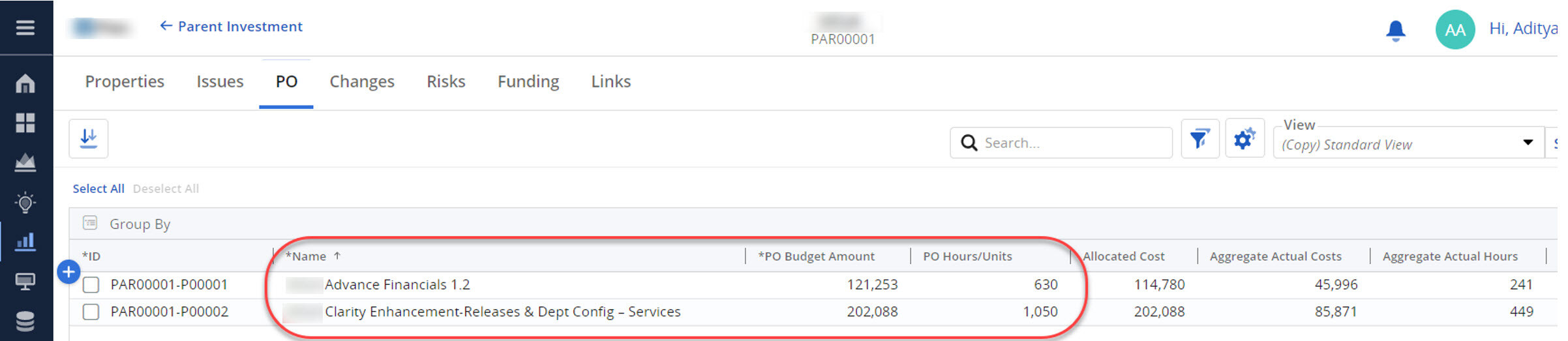

Once a UCLA initiative is funded, the POs can be further divided to meet specific needs, such as paying vendors, purchasing hardware or software, or covering employee salaries. Within the PO sub-object is another sub-object called PO Detail, where funds are broken down to apply to individual work items. Our team developed a process to generate Charge Codes when these PO Detail items were ready to be used. These charge codes can then be assigned to individual tasks within any investment in Clarity, appearing on project plans and timesheets for resource tracking. An additional interface was created to import non-labor costs from the financial system and track them against POs.
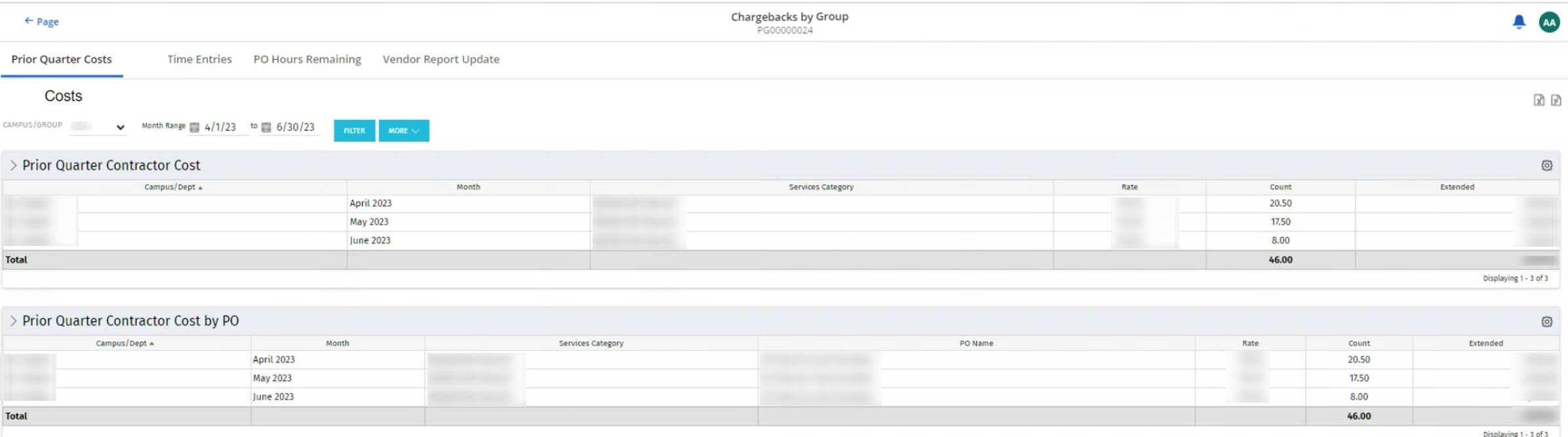
By utilizing Charge Codes to track costs associated with these POs, UCLA campuses can spend funds according to their preferred project management methodology, whether Agile or traditional waterfall. Reports and portlets within Clarity were developed to help UCLA investment managers monitor approved funds and enable chargebacks, completing the planning-to-execution cycle.

Top-down planning might sound too good to be true for some organizations, but with creativity and a powerful project and portfolio management system like Clarity, it’s well within reach for institutions like UCLA. If you’re interested in breaking free from the intricacies of detailed annual planning and rigid investment management, our team can help. Connect with a Clarity expert to learn how we can streamline your planning and funding processes.