ValueOps
Capacity Planning
Agile


Every plan looks solid until it meets reality. Even the best plans buckle when capacity, timing, and change aren't in sync.
Maybe a key contributor is double-booked across two critical initiatives. Or the budget gets stretched midyear, and leadership calls for an urgent reprioritization. Sometimes everything seems fine on paper until a new mandate lands or a competitor launches a surprise feature, and your roadmap has to shift.
In each case, a plan was in place. But the moment strategy, capacity, and execution fall out of sync, that plan stops being useful. And when every what-if means rebuilding spreadsheets and slides, by the time you can gather the right data to respond, it's already too late.
This is the planning gap: the space between what you intended and what actually happens.
And it's exactly what aangine was built to close.
aangine is a strategic portfolio planning platform that helps PMOs and planning leaders stay ahead of change. It sits on top of the tools you already use, models trade-offs, and sends updated plans back to those tools, so you're always working from a plan that reflects reality.
Here's how it works.
Most capacity plans look great at the start. But when timelines slip or key people are spread too thin, those cracks spread quickly. aangine's AI Portfolio Analyst flags what needs attention, like a blocked dependency chain or an overbooked team, and ranks it by severity. You get an early heads-up before small issues become major delivery risks.
When leadership shifts direction or a funding decision changes midstream, bring the change into the plan and replan in one click. aangine reshuffles the portfolio around dependencies, deadlines, and locked projects. Then it shows where the strain lands on each team and budget. You can compare scenarios side by side and see exactly what it would take to say yes.
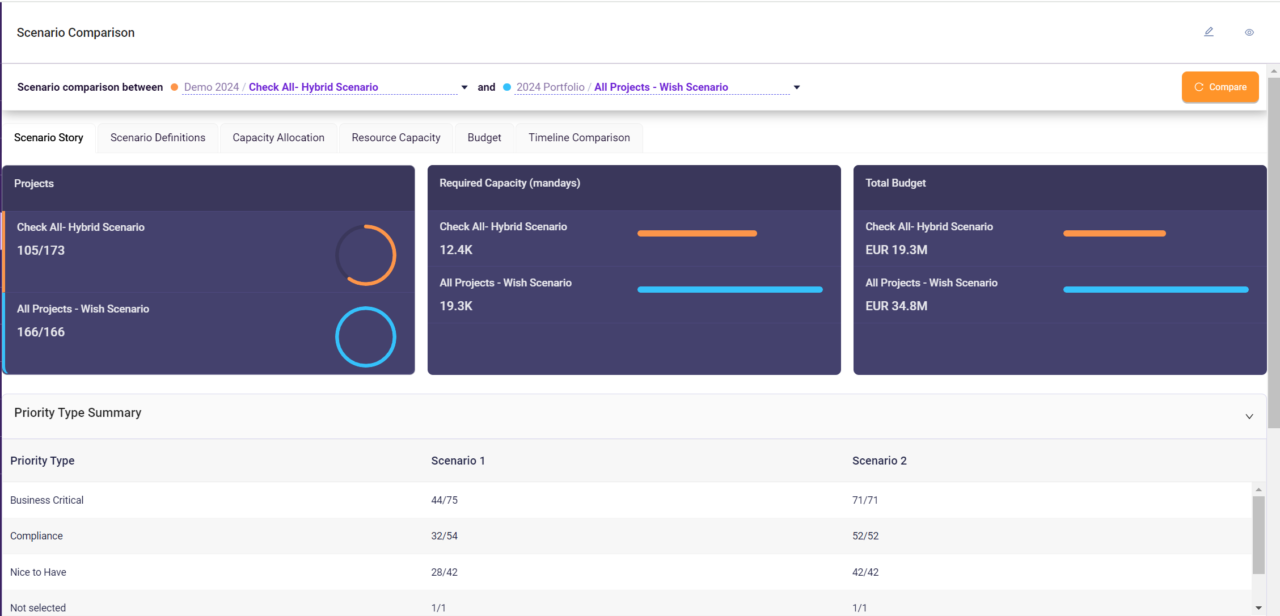
Once you've seen the options, aangine gives you the power to adjust: rebalance funding, shift resources, or reorder the roadmap. Clear, data-driven insights back every move, so you're not guessing what the downstream impact will be, and your team still makes the final call.
Change is only helpful when teams can act on it. Once a scenario is approved, aangine pushes the new baseline back to your PPM and delivery tools, so teams aren't left in the dark. Everyone works from the same priorities, even as those priorities evolve.
aangine doesn't replace your current systems. It adds a planning layer on top of them and brings their data together in one place, so you don't lose time chasing down updates or stitching together reports. It connects with portfolio tools such as Clarity, Planview, and ServiceNow SPM. On the delivery side, it works with Jira and Azure DevOps, and spreadsheets work too.
If your team already plans in Planview Portfolios or Clarity, aangine works alongside them rather than replacing them. For a closer look at planning inside Portfolios, see investment and capacity planning in Planview Portfolios.
Many teams put off better planning until a new PPM system is in place or the data is cleaned up. aangine doesn't need either to get started. A project type and a total effort estimate for each project are enough for a first plan, and aangine spreads that effort across phases, roles, and months. You can also set how much of each team's time goes to projects versus day-to-day operations, so the plan reflects the capacity you really have. Better data follows once people see why it matters.
aangine's algorithms do the math on your real data, and its AI points out where to look. The decisions stay with your team: you lock what matters, accept or adjust what aangine proposes, and agree on trade-offs in the room. aangine also lets you bring your own AI, and only IDs leave your environment, never names.
aangine helps you adapt in minutes instead of weeks and keep execution aligned with strategy, even when nothing else stands still.
Virelli sells aangine and works alongside aangine's team. Our part is the portfolio side. We help you decide how planning should work, including your portfolio structure, planning cadence, and who owns which numbers. We also make sure aangine fits your Clarity or Planview setup and stay involved after go-live. That work draws on more than two decades of enterprise PPM and work management experience, and it starts with strategy and advisory when you're still deciding what you need.
aangine is a strategic portfolio planning platform from Continuous Software. It sits on top of existing PPM, work management, and financial tools as a decision layer. When something changes, planning teams use it to compare scenarios and replan the whole portfolio in seconds, then push the approved plan back to those tools.
No. aangine works alongside the tools you already use, such as Clarity, Planview, Jira, Azure DevOps, or spreadsheets. Data flows both ways: aangine pulls in projects, capacity, and budgets, then sends the approved plan back, so delivery stays in the systems your teams already know.
Less than most teams expect. A project type and a total effort estimate for each project are enough for a first plan, because aangine spreads the effort across phases and roles. Teams can start with what they have and add detail as the plan proves its value.
Talk with a Virelli advisor about how aangine would fit with your current tools and planning process.